How Compiler Research Transformed Scheduling for Smaller Transit Agencies
Learn how Compiler transformed smaller transit agency scheduling with a research-backed pilot of Remix by Via. By Laney ManganAs transit riders, we depend on accurate schedule information to get where we need to go. Too many of us, however, are all too familiar with the frustration of missing schedules, inaccurate holiday schedules, and other situations that affect travel.
But it’s not just commuters who struggle with the effects of scheduling. Smaller transit organizations are trying their best, but face budgetary constraints, technical hoops to jump through, and timing issues that affect how transit information is disseminated to the public.
Overview: The challenges smaller transit operators face in keeping schedules up to date
On behalf of the California Integrated Travel Project (Cal-ITP), our research team at Compiler asked this important question to local transit agencies across California in an effort to find a solution for scheduling issues.
Immediately, we found a pattern: The smaller an agency was, the more likely it was to still be creating its schedules by hand. Because smaller agencies often don’t have extra money for things like scheduling software, they instead get stuck with the tedious, time-consuming process of manually building their schedules using spreadsheets. This time-intensive and error-prone process can result in inaccurate schedules that become the frustration of many bus riders.
While GTFS data can be created manually in tools like Excel, it is also time-intensive and requires subject matter expertise. It’s similar to trying to run payroll in Excel — while it can be done, it’s difficult and not ideal. Digital programs are the gold standard within the industry, saving time, money, and effort.
Identifying the issues with common scheduling software vendors
To begin tackling this problem, our team first sat in on demos of scheduling products in the market and talked to several vendors in the ecosystem. The main issues we saw were:
- Prohibitively expensive pricing models — Many solutions have pricing models that require annual contract minimums based on fleet size, making the cost of the software (not to mention the resources needed to procure) prohibitively high for small agencies.
- Smaller agencies have different training needs — An agency with a full-time scheduler on staff can more easily dedicate resources to having that person fully trained on the scheduling platform they use. For a small agency, where the same person who schedules may also sometimes drive a bus, training for platform mastery requires a different approach since they’re only using the software one to two times per year at most.
It’s not that smaller agencies don’t want to use external vendors for scheduling, it’s that they can’t always afford them, and they don’t always have enough people or training to use software efficiently.
Diving into research and interviews at four smaller California transit agencies
To better understand the challenges smaller agencies are facing, Compiler conducted extensive research via interviews and site visits with the following four agencies in California:
- CleanAir Express
- Ventura County Transportation Commission
- Simi Valley Transit
- Merced The Bus
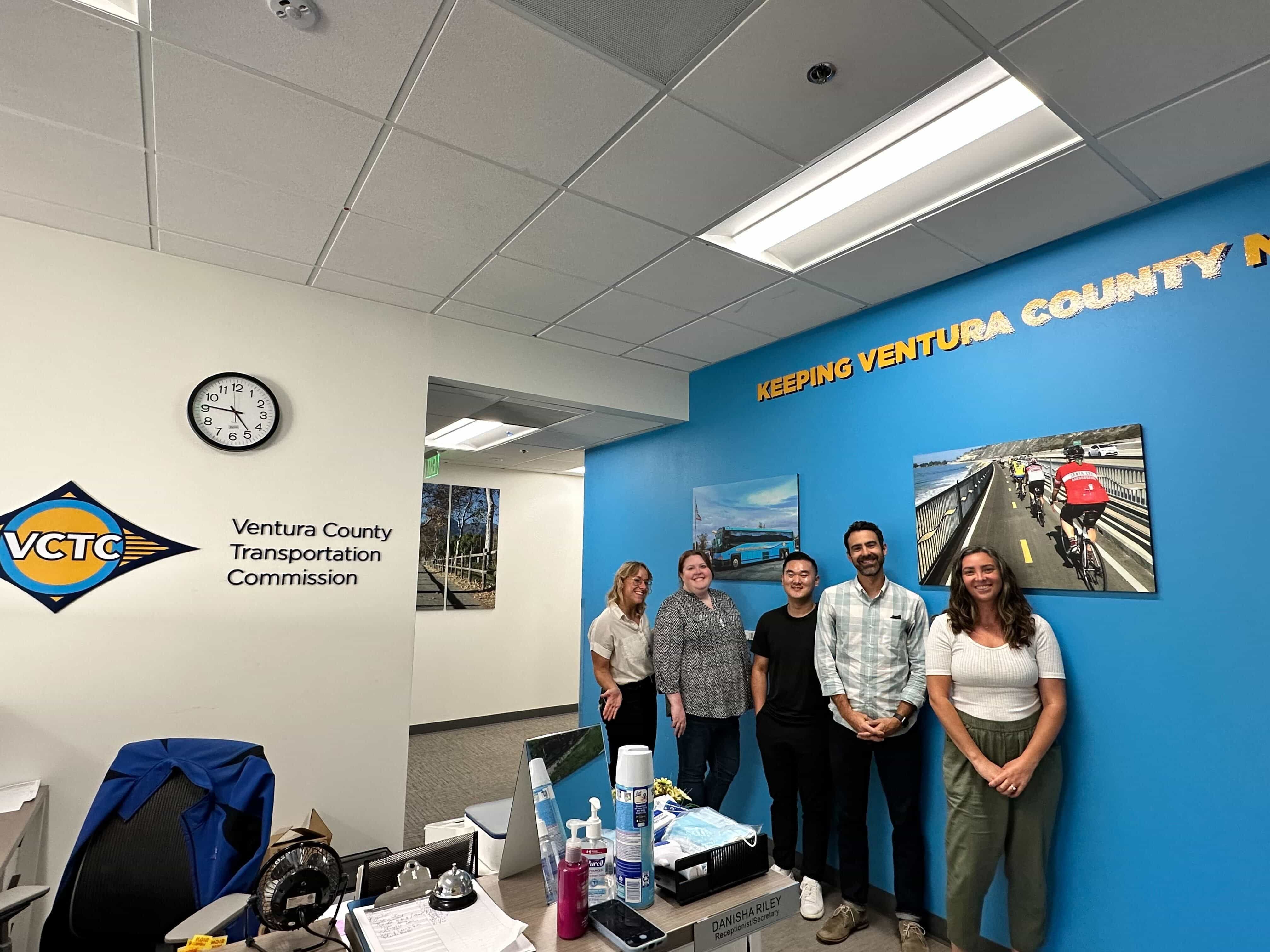
These agencies ranged in size from nine to 50+ vehicles and covered various types of routes, from local to commuter. They consisted of a mix of urban and rural agencies, and all had varying degrees of familiarity with the end-to-end GTFS process and were all looking to streamline scheduling operations and GTFS management.
Auditing each agency’s current situation
Our primary goal was to understand from staff at these agencies the specific challenges they faced when it came to scheduling — including planning new routes, changing existing ones, and moving towards electric vehicles. Our interview questions focused on the following major themes:
- Existing operations: How well is your existing scheduling process working?
- Technology considerations and dependencies: What issues do you encounter with the tech you have?
- Staffing, resources, and other constraints: What prevents you from being able to maintain up-to-date schedules?
- Big picture and future goals: How could improved scheduling help your agency meet its longer-term goals?
What was revealed in interviews
After the Compiler team spoke with and interviewed the staff at the smaller transit agencies, we discovered four key themes that highlighted why they were struggling with scheduling.
Scheduling software is cost-prohibitive for small agencies Most small agencies only change schedules one to two times per year, and staff may only need to perform a couple of required tasks per year using the software. Because of this, staff may need refresher training to perform tasks that they only do once a year. “I probably logged in [to Remix] about 6-7 times over the course of four months. Maybe took an hour for the big schedule change and a few minutes here and there for minor updates,” said Whitney from SBCAG.
It’s hard to produce high-quality, accurate GTFS using manual processes There’s a higher risk of manual error when using a process that begins in Excel and then imports into multiple tools. Also, GTFS terminology may be different across various tools, so it can be hard to keep track of the process and quality. Similarly, GTFS validation errors are complex to troubleshoot.
Well-designed, interoperable software can improve efficiency The team found that staff can complete scheduling and operational tasks more quickly and efficiently thanks to automation, and they gain new insights when they can visualize their routes and operations. “We’re trying to better understand what our contractor is doing. I thought it was really helpful to visualize our current route path because we don’t really have a good way to do that in any of our existing software,” reported Claire from VCTC. Staff save time when they can do multiple scheduling tasks within one tool instead of cobbling together data using several programs.
Good help and customer support is critical for lower-usage tools Staff often need to search for information that they only access biannually, and they may lose time if they have to contact support in asynchronous workflows. Because of this, support requests without prompt response times or clear SLAs may cause users to abandon the task at hand or use workarounds.
Implementing Remix by Via for a free-trial pilot
To workshop a solution, we partnered with a vendor named Via to provide a free trial of their Remix automated scheduling platform to these four agencies. During this limited-term engagement, Compiler would directly observe these agencies’ use of the platform and evaluate how well it met their needs.
Compiler’s team consisted of one UX researcher, one technical lead, and one product manager. Via also contributed one customer success lead and one implementation lead. Research consisted of user interviews, competitive and landscape analysis, and site visits, totaling 10+ interviews and 40+ hours observed using Remix.
Together, the team went onsite and completed onboarding and training on the Remix platform at each agency. After training, we shadowed staff as they performed key tasks using Remix:
- Route planning
- Schedule changes
- Managing and exporting GTFS
- Reviewing data and reports
We also observed operational tasks such as adjusting runcuts using agency-specific labor rules and guidelines.
Good news: Insights from our pilot have now been incorporated into Remix’s feature set
Over the course of six months, we worked collaboratively and iteratively with technical and executive team members at Via to share our insights from the pilot program. We also contributed to their roadmap of new product and feature improvements.
Via has implemented a number of product improvements for Remix that benefit smaller transit agencies, all of which were based on our research, including:
- A new support ticketing system
- More GTFS-focused training materials, including live webinars and online content
- GTFS validation error tools
- GTFS URL management
One of the most important components that we helped identify was the need for additional training resources targeted for transit agencies with smaller staffs that only update schedules once or twice per year.
Remix has been purchased by CalSTA on behalf of smaller transit agencies to provide access at no cost
In a huge win for smaller transit agencies, CalSTA announced in November 2024 the purchase of Remix’s suite of planning and scheduling software on behalf of smaller transit agencies in California. Thanks to CalSTA taking a lead role, 234 small agencies in California can not only test and learn the Remix software at no cost, but actually put it to use to save operator time and ensure bus schedules are accurate.
Informed by Compiler’s research findings that providing hands-on education and platform training were equally as important as access for adoption, agencies will now receive support through a program administered by Cal-ITP to do just that.
This program will take a customer-centered approach to proactively identify agencies that qualify for licenses and support them through onboarding, training, and monitoring the quality of new GTFS data created.
In-house Caltrans staff will focus on data quality, while the Compiler-staffed customer success team will focus on communications, agency outreach, and customer support to ensure that the adoption process runs smoothly and helps expand access to smaller transit agencies across the state of California.
The Compiler customer success team is proactively promoting the program to ensure eligible agencies are aware of this beneficial opportunity. Our team supports agencies every step of the way, — managing the intake and application process, connecting accepted agencies with the appropriate Remix resources and contacts, and providing streamlined support as they use Remix for their scheduling and operational needs.

Internally, this program works through close coordination and collaboration across multiple partners. The Compiler-staffed customer success team collaborates with the Caltrans transit data quality team, Remix vendor representatives, and Remix program and project managers to provide a quality experience for the agencies.
This is a direct win for the small agencies in California. Additionally as Remix is now available on the State of CA Software Licensing Program (SLP) any state or local government can view published prices and purchase using this contract vehicle.
Compiler: Bringing human-centered research to help make California transit better
Behind every transit program are human beings trying to serve their community. At Compiler, our passion — and expertise — is making government tech solutions easy-to-use and accessible for all. Our work speaking with smaller transit agencies on this case study, conducting research around their pain points, and training them on Remix is part of our commitment to improving the state of public transportation in California.
We’re optimistic that with continued support for research projects that bridge the gap between agencies and technology solutions, we can further move the needle on the data quality that riders depend on every day. We are confident that this, in turn, will translate to a substantially improved rider experience and increased access to transit services that work better for everyone.
If you’d like to learn more about Compiler’s human-centered research practices or partner with us on a new project, we’d love to talk. Email hello@compiler.la to get started.
About Compiler
Compiler is a woman-owned software consultancy. We are cyclists, pedestrians, and bus-riders and we are passionate about solving technology challenges that support a climate-resilient future. Reach out to learn more about how we can help you make sure your technology spend provides the best outcomes for your staff and users.
This project was completed under the Technology, Digital and Data Consulting (TDDC) Master Service Agreement (MSA) - TDDC MSA 5-22-70-25-341.